On the first visit I measure the area with you and we mark the cut lines together, so there's no question later about where the blade goes. I ask whether the slab is post-tensioned, built with steel cables pulled tight inside it, because that changes where we can cut at all. Before we cut or core, we scan for buried cable, conduit and rebar, the steel bars set in concrete for strength, so we know what sits in the path. Once we've settled where the crew hooks up water and power, we cut wet, because water on the blade cuts the dust way down, silica dust included. We collect the slurry, the gray paste of water and concrete the saw leaves behind, so it stays out of the drains, then break out and haul the cut pieces and leave the edges clean.
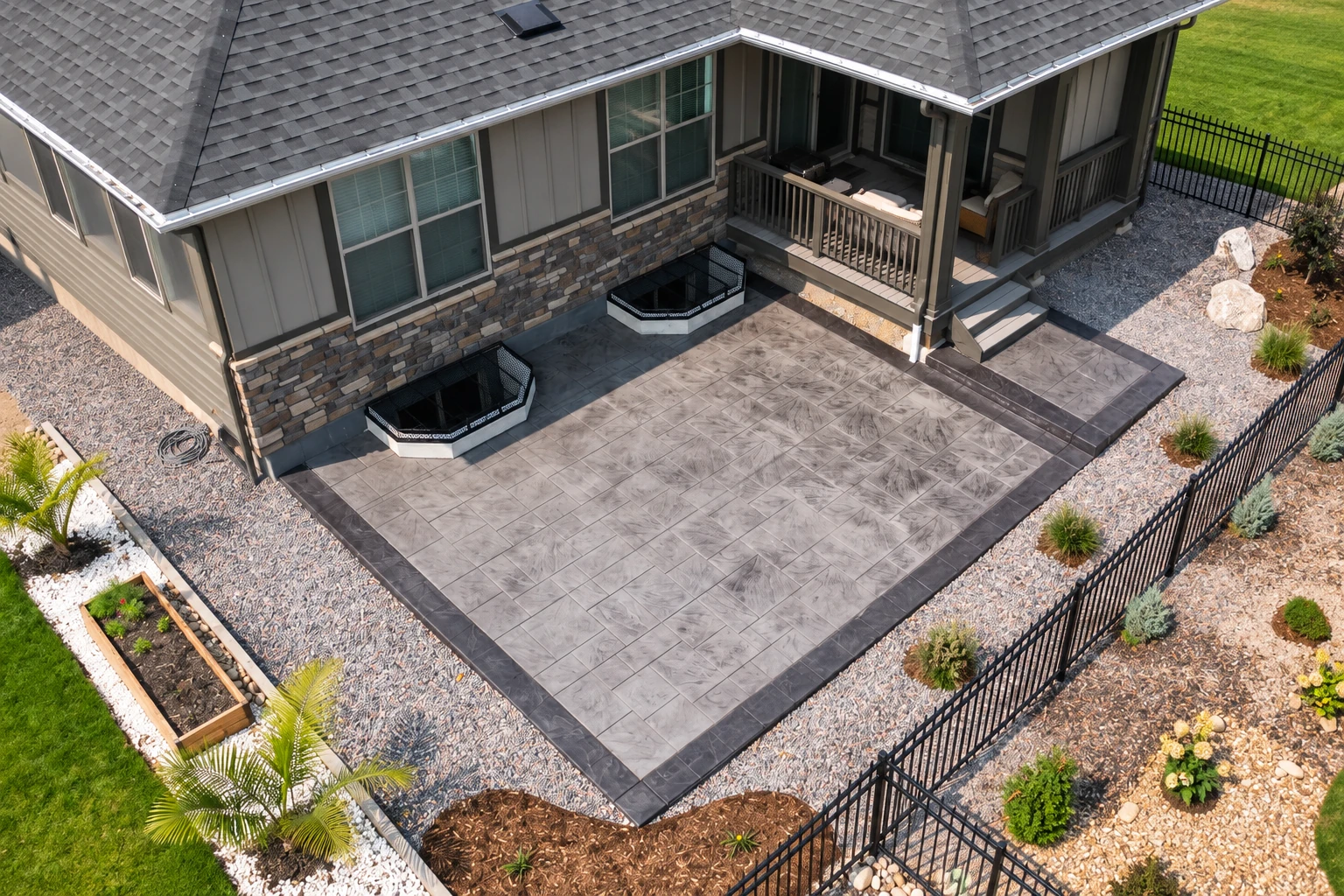
A cut is often the first step of a bigger job, and we can carry it through. When a cracked section of driveway comes out, the new one goes in as part of our concrete driveway building work. If you're widening a patio or replacing a broken corner, it becomes concrete patio construction. On either one I'd rather spend your budget on digging out and packing the subgrade, the ground the slab sits on, than on the finish, because a weak base is where most new cracks start.
Sawing slabs, driveways and patios
This suits flatwork, the driveways, patios, walks and garage floors that sit on the ground, when a section has cracked or sunk or a line has to run underneath. We cut long, straight lines with a walk-behind floor saw and finish tight corners with a hand saw where a big blade can't reach.
Core holes and wall openings
Core drilling suits round holes for pipes, drains and conduit, because it leaves a clean, exact hole instead of a broken one. Wall sawing suits doorways, windows and openings in a basement or retaining wall, where the edges need to stay square for the next trade.