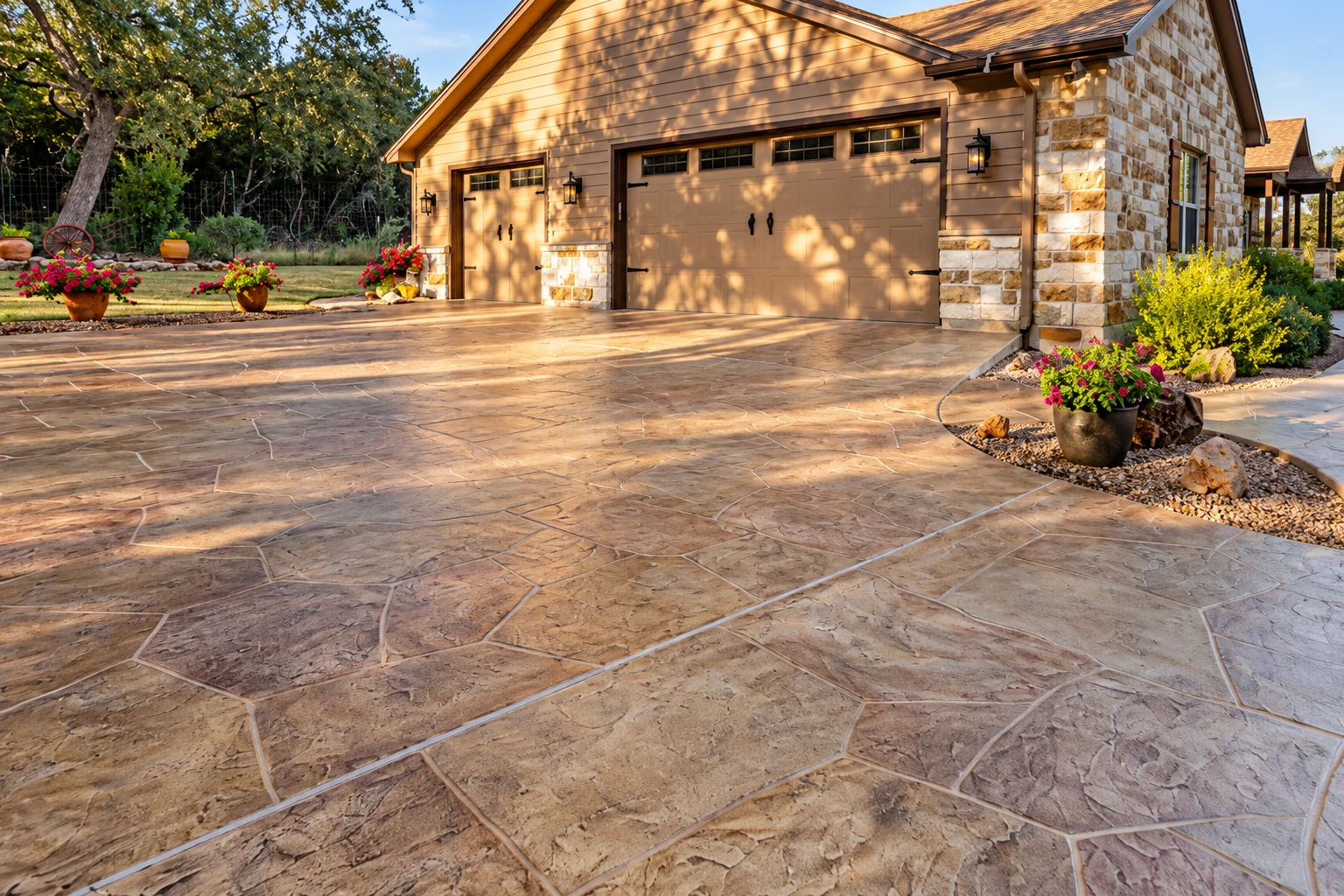
I start by measuring the area and checking where the water runs, so the finished slab falls away from your house. Our crew digs out to firm ground and packs the subgrade, which is what the slab sits on, because a base that's only raked level settles and takes the concrete down with it. We set forms and rebar, the steel inside that keeps the slab from pulling apart, sized for cars or for feet. Before the pour, we talk through integral color and color hardener with you, because the color method decides how the surface looks after a chip or years of wear. We pour early enough to stay out of the midday heat, which leaves a weak, dusty top. Then we color the slab and press in the pattern mats while it's soft. We cut control joints, grooves that tell the concrete where to crack, and we plan them along the pattern lines so they blend in. Once it has cured, we seal it. If the budget gets tight, the base is the last place I'd cut, because nobody sees it on day one and it decides whether the pattern stays flat.
Stamped work usually ties into other concrete around the house. A stamped patio often meets a walk to the side gate or front door, and with concrete sidewalk building we can match the edges and grades so the two read as one job. When a driveway runs up to the garage, we also handle garage floor concrete, which takes a plainer, harder-working finish inside.
Stamped patios and garden areas
This suits a backyard slab where you want the look of slate, flagstone or wood plank without setting each piece by hand. It carries feet and furniture, so the build is lighter than a driveway and more of the budget can go into the pattern and color.
Stamped walkways and entries
A walk to the front door or side gate is a good place for a border or a brick pattern that frames the house. It's narrow and takes a lot of steps in the same line, so a firm base along the edges and careful joint placement matter more than the size suggests.
Stamped driveways
A driveway carries cars, so it needs a thicker slab and more reinforcement than a patio does. It's also where the color method matters most, so we go over the trade-offs with you before anything is poured.