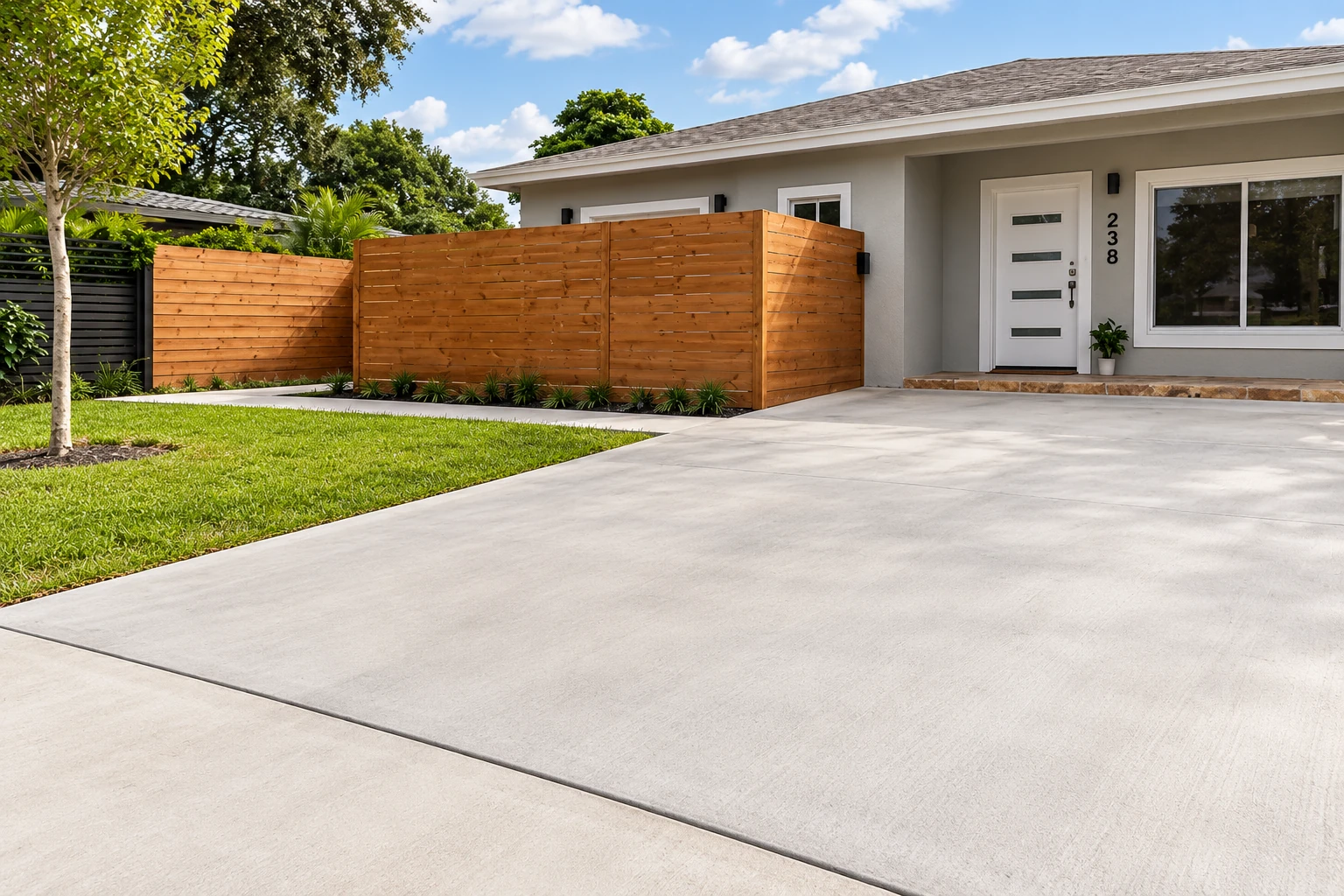
I start by asking what will actually park on the lot and how often, because a lot for a few cars and a lot for delivery trucks are different slabs. Then I check the ground across the whole area. Anywhere the soil is softer, wetter or looser than the rest, we dig it out and replace it so the subgrade, the soil the slab sits on, gives even support before we form a single panel. We set the forms so water runs off the lot and away from any building. Where the traffic calls for it, we add rebar, steel that holds the slab together if it cracks. We pour in the cooler part of the day so the top doesn't dry out weak and dusty. We give it a broom finish, a light texture for grip in the wet. Before the slab has a chance to crack on its own, we cut control joints, shallow grooves that give cracks a planned line to follow. Then we keep it damp while it cures and gains strength before anyone parks on it. If the budget gets tight, I'd rather you spend it on the ground work than on the finish, because nobody sees the base on day one and it's what decides whether the lot stays flat.
Some lots sit against a building, a wall or a carport, and those edges often need concrete footings for posts, curbs or a low wall, which we can pour as part of the same job. If a garage or small structure next to the old paving has settled out of level, foundation raising can bring it back up before we tie the new lot in.
Lot for everyday cars and pickups
This suits a home, a few units or a small office where the traffic is mostly cars and pickups, and it's usually the simplest slab to build. A broom finish and well-placed joints do most of the work here, so the money goes into the ground and the concrete instead of extras.
Heavier lot for trucks and deliveries
This suits a lot that sees work trucks, vans or regular deliveries, because heavier wheels need a thicker slab and often steel inside it. We look hardest at the turning and loading spots, since that's where a lot built too thin starts to break up first.