I start by marking out the patio and checking where water runs now, so the new slab falls away from your house instead of toward it. Our crew strips out the topsoil, roots and loose material, because anything soft left under a slab keeps settling after the pour and takes the concrete with it. We pack the base down hard, set the forms to the slope and lay in rebar, steel rod that ties the slab together, where the plan calls for it. After the pour we finish the top, usually with a broom finish, a light texture that gives your feet grip when it's wet, and then cut control joints, shallow grooves that give the slab a planned place to crack. I'll be straight with you that joints help control cracks and don't stop them. Last, we keep the new slab moist while it cures, the slow hardening that gives concrete its strength, because a slab that dries out too fast ends up with a weak, dusty top.
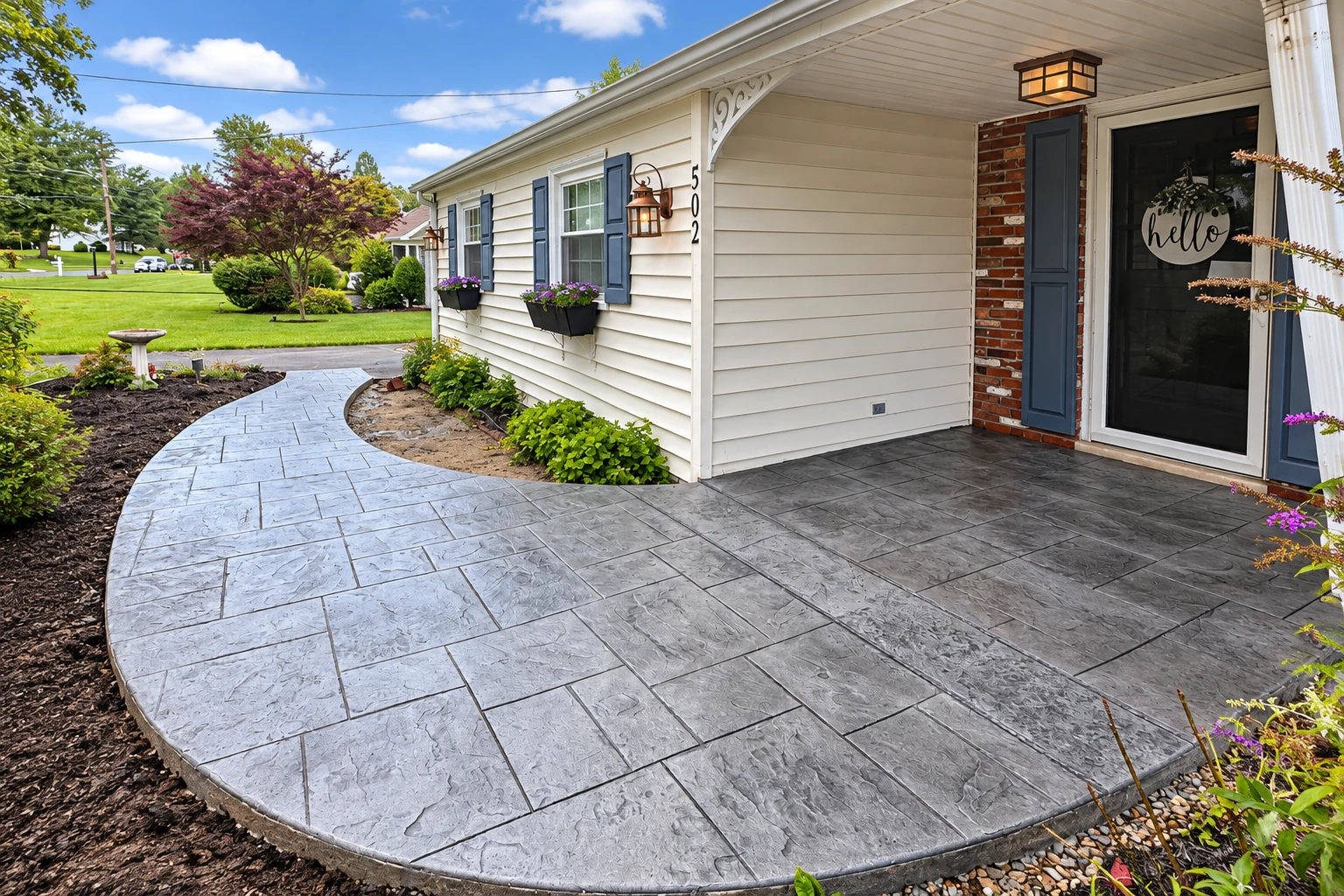
A lot of patios connect to other flatwork, the trade's word for any slab on the ground. If you want the surface to look like stone or tile, we can do stamped concrete on the patio itself, and if you need a path from the driveway or side gate, we can build the concrete sidewalk at the same time so the two meet at the right height.
A new patio on open ground
This suits a lawn, dirt or gravel area off the back door that you want to start using. Most of the work is the dig and the base, so we take the soft ground out, pack what goes under the slab and set the slope before any concrete arrives.
Replacing a cracked or sunken patio
This suits a slab that's broken up, sunk at one end or holding water against the house. We break out the old concrete and look at what was under it, because a patio usually fails from below, and we fix that before the new pour.