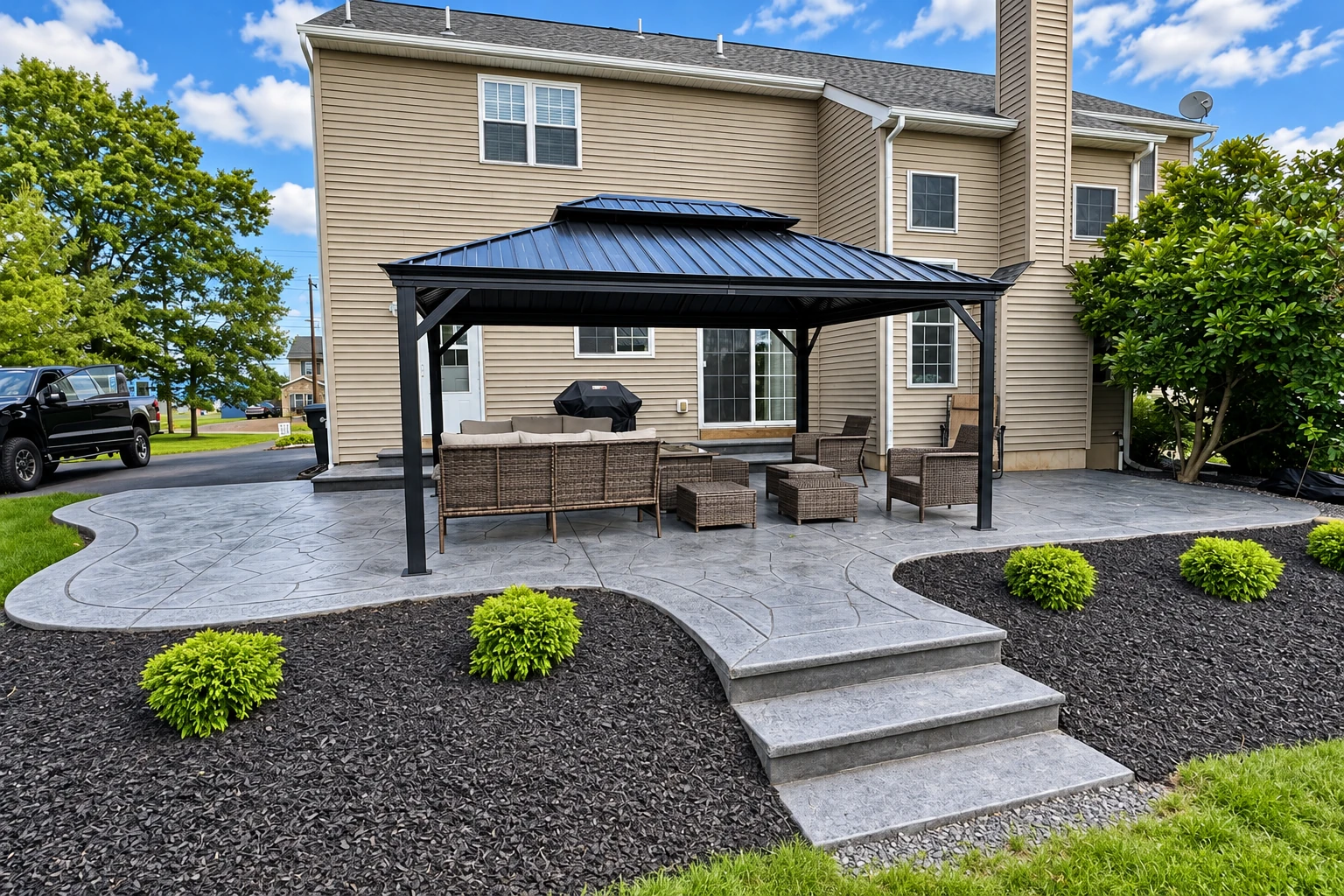
I start by measuring the area and looking at access and any concrete that's already there, then we talk through finishes, because stains and colored concrete shift in shade from spot to spot and you should know how much before you choose. If you're close to the ocean, we go over a sealer or water repellent plan at the same time. On a new pour, we dig out and pack the subgrade, the ground the slab sits on, because a base that's only raked level settles with the dirt and takes the slab with it. We check where the water runs so the finished surface falls away from the house, set the forms and the rebar, the steel that holds the pieces together if the slab cracks, and pour in the cooler part of the day, since midday heat can leave a weak, dusty top. Then we color, finish and stamp or stain, cut the control joints on time, grooves that give a crack a straight place to go, and let it cure. The base is the part you can't see on day one, so it's the first thing people want to trim from the budget, and I'd rather you pick a simpler pattern than skimp underneath, because that's where most trouble starts.
Decorative work often meets other concrete around the house. A colored patio may run up to one of our concrete retaining walls, and we plan the colors so the two look like they belong together. Stain works indoors too, over a new slab from our concrete floor installation work.
Stamped colored concrete
This suits a patio, walkway or pool deck where you want the look of stone or brick without laying separate pieces. We color the concrete, smooth it, lay a release powder or plastic sheet so the tools lift clean, then press the pattern in while it's still soft.
Stained concrete
Stain suits someone who wants a mottled, natural color instead of a pattern, on a new slab or a sound existing one. It etches into the surface and colors it permanently, so the shade comes from the concrete itself and changes a little from spot to spot.