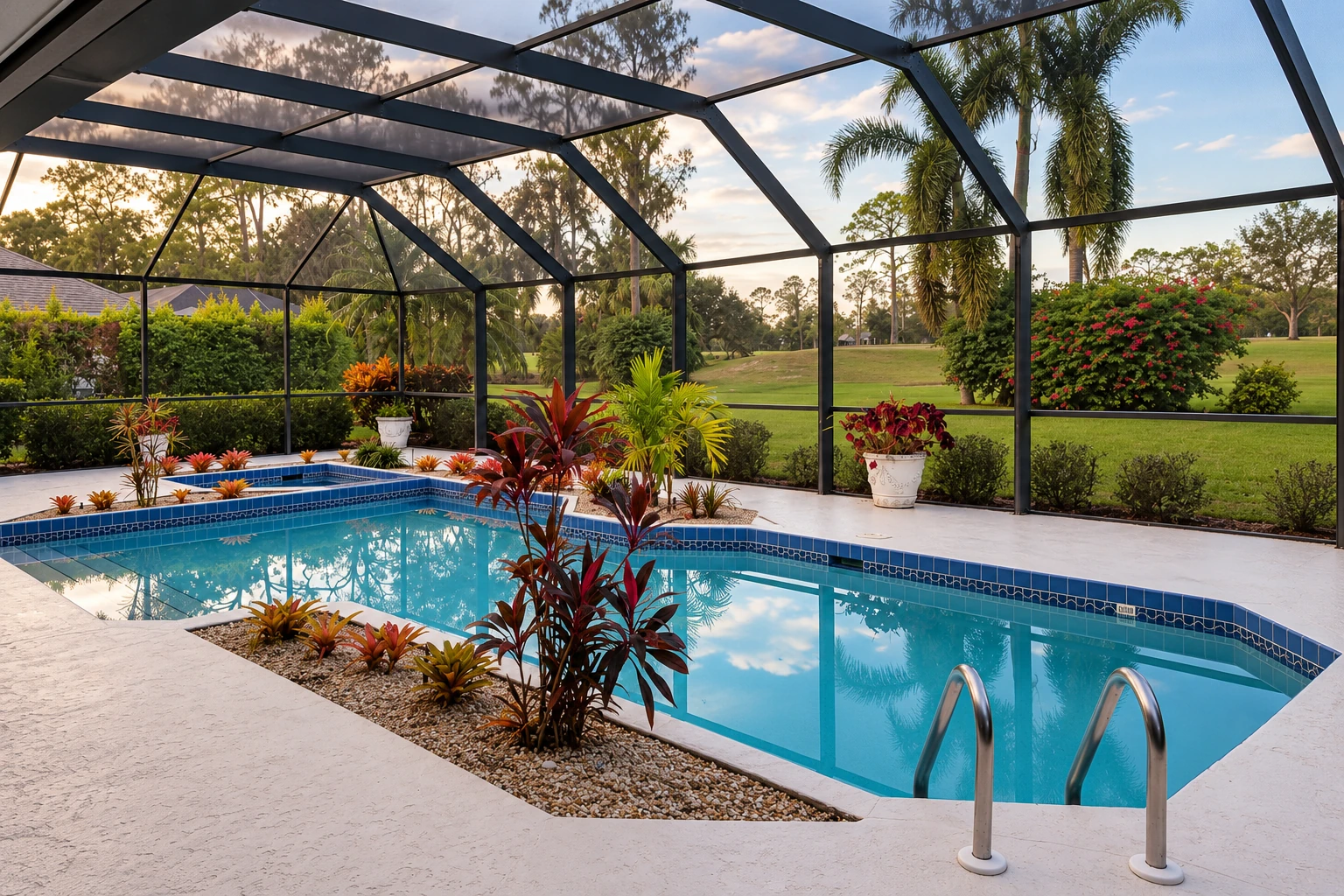
I start by looking at the base, because what's under a deck matters more than what shows on top. The subgrade, the ground the slab sits on, should be dug out and packed hard instead of raked level, since good ground is one of the main reasons a slab holds up over time, so when you compare bids, ask each contractor how they'll prepare it. If your concrete is sound, I'll tell you, and we can refinish it instead of tearing it out. I also check how much deck your lot can hold under the city's rules, which I explain below. For a new deck, we break out the old one, dig out and pack the base, set the forms and lay rebar, the steel bars that hold the slab together. We pour early in the day so the afternoon heat doesn't dry the top too fast and leave it weak and dusty, then we finish the surface and cut control joints, shallow grooves that give the concrete a place to crack so any cracks follow lines we chose. The base is hidden on day one and it's the first thing people want to cut, but I'd rather you go plainer on the finish than thinner on the prep, because a surface can be redone and the ground under it can't without tearing the slab out.
A pool deck usually meets other concrete. If it steps down to the lawn or up to a door, we build concrete steps to match, and if a pool house or cabana is part of the plan, we can pour its slab foundation alongside your engineer.
A new pour on a rebuilt base
This suits a deck that's cracked through, sinking or lifting, or one you want to make larger or reshape. When the trouble is in the ground, a new surface alone won't fix it, so we take the slab out and start from the base up.
A textured refinish over sound concrete
If the slab is solid and only the surface is worn, one maker's spray texture, the finish people call cool deck, goes right over existing concrete. The maker says it gives a cooler walking surface with skid resistance that exceeds friction requirements, and you skip the cost of a new pour.